Read full transcript
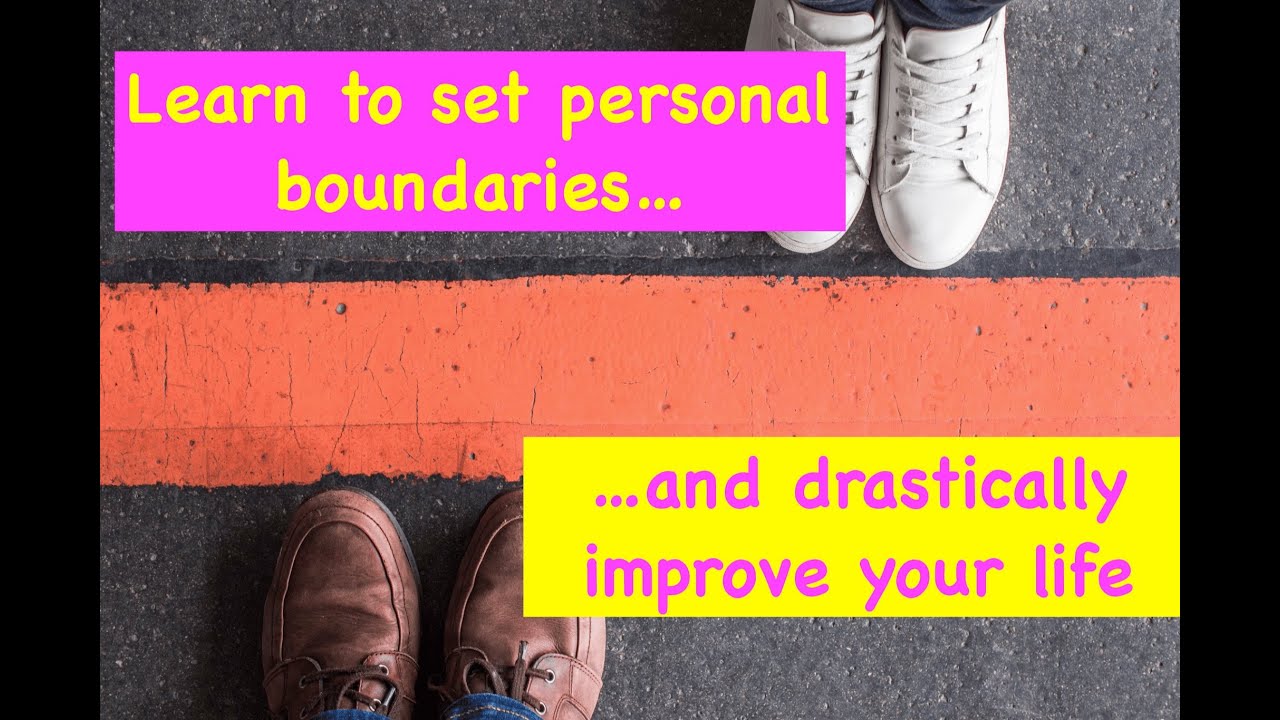
What are boundaries? Personal boundaries are the limits and rules we set for ourselves within relationships, provided by therapistaid.com. Or a boundary is a border or limit which we set in order to protect ourselves. Personal boundaries may be physical or emotional, and provide an important tool in protecting and caring for ourselves. This is the definition by the VA. Welcome to The Meaningful Shit Show with your host, Vincent.
In a world full of selfishness, blaming and scapegoating, Vincent aims to inspire inner work with deep topics and insights on emotion regulation, personal development, psychology, philosophy, and the trauma growth healing process. Welcome to another episode of The Meaningful Shit Show with me, Vincent. Today, we're going to talk about personal boundaries. Let's start with a quote in the words of Brene Brown, one we all know and love. "Daring to set boundaries is about having the courage to love ourselves, even when we risk disappointing others."
Go forth, love yourself, set boundaries, live authentically. Cool. So let's dive in first. What are personal boundaries? I already gave a couple of definitions in the prelude, but let's look at what the Webster dictionary has to say about that. What is a boundary? It's something that indicates or fixes a limit or extent. These two trees mark the boundary of our property, the mountain range that forms the country's northern boundary.
So something very, very physical. That's where it originates from. But we're, of course, interested in personal boundaries. So this is what Wikipedia says about it. Personal boundaries or the act of setting boundary is a life skill that has been popularized by self-help authors and support groups since the mid 1980s. That means that before that wasn't really as popular and we didn't hear that much about it. So personal boundaries are established by changing one's own response to interpersonal situations rather than expecting other people to change their behaviors to comply with your boundary.
The boundary is respected without requiring the assistance or cooperation of any other people. Setting a boundary is different from issuing an ultimatum. An ultimatum is a demand that other people change their choices so that their behavior aligns with the boundary setter's own preferences and personal values. The term boundary, of course, is a metaphor with in-bounds meaning acceptable and out-of-bounds meaning unacceptable. Concept of boundaries has been widely adopted by the counseling profession, etc.
etc. So this was Wikipedia talking about that. There's already a couple of very clear hints in there, and that is the difference between boundaries and ultimatums or threats. We'll dive into that a little bit deeper. So first of all, what we've learned is that boundaries are clear with consequences because although it isn't included explicitly in the terminology about boundaries, like the line that demarcates our property, like the boundary of our property, but at the same time, it makes sense for there to be certain consequences when you cross that boundary.
This is the reason that we set boundaries, even if you cross the mountain range from, for example, Chile into Argentina. There are different rules apply, right? So what is the key difference here? Because at one point, we have to let the metaphor go. And like Wikipedia already said, it's about defining the difference of in bounds and out of bounds. So what is acceptable and what isn't acceptable.
So the term boundary in a way is confusing because it's such a physical word in a way. So the key here of boundaries where they're different from ultimatums is that for ultimatums or threats, we expect others to change. Where for boundaries, we don't, we just respond to the situation differently. And I want to pause for a moment because it seems so easy to glance over. It seems to be like, okay, well, that's kind of like the same thing, or it's like kind of like weak, because I would like to have like strong consequences and laws and whatever.
And it has a little bit to do with like enforcing laws, I feel, in a way, because if you look at our society, why do we have laws? Is it because we don't want to change people's behavior, but just enact consequences when they behave in a certain way? No, by and large, we want to influence the behavior of people. Why do we have speeding tickets? Because we would prefer people not to speed, but at the same time, you can also see them as a boundary.
Because people are going to speed, and maybe I'm not really interested in changing that that much. I just want cash money to compensate for that behavior that people are going to do no matter what. So it depends on the eye of the beholder. You can look at it in two different ways. I think for law, it makes more sense to look at it from a perspective of like, hey, we actually want to change people's behavior.
And then if they don't, that then there is a punishment, which you can start thinking about the whole system of punishments versus reward. But anyways, we are definitely digressing. So let's get back to the meat of it. So boundaries are based in our core values and needs. So they're personal. And they need to be, like I said before, clear, concise, and have a consequence. So there's two schools of thought.
There's a school of thought that really wants you to express those boundaries, especially to your inner circle. For your external circle, you can't. Like if your Starbucks barista starts talking about politics, and you have a boundary around that, you just don't want to talk about politics. The poor barista doesn't know. Right. So that means that you still get to enact your boundaries. Like maybe you're going to turn around and leave because you're not going to engage in the conversation.
Whatever, it doesn't really matter. But it's not one of the rules of engagement that you first go to Starbucks and say, oh barista, before you say anything, these are my boundaries. So that doesn't really make sense. Also because it would sort of influence the barista to change their behavior. If you say, oh, I don't want to talk about politics, it feels a little bit more like an ultimatum, if you know what I mean.
This is why it's so subtle. This is why I had such an aha moment when one of my DBT groups, we started talking about this in detail. So the consequence for your inner circle, sometimes you want to explicate it. Let's say that you have a racist uncle that at your Thanksgiving dinner always goes into a certain direction, and you would like him to know that if he starts talking about racial topics, that you're going to leave the room.
You can still communicate that in the sense of not encroaching on his territory, being like, hey, if you want to go on on your monologue about racism or, you know, go right ahead. And I am going to leave. You see the difference there that you're not necessarily telling the racist uncle to not talk about his usual topics, right? You're just explicating, like, if you do, I'm going to leave the room.
Note as well that you don't have to tell your racist uncle that. You could also just do it. Which of the two is more effective? You decide, like, I personally think, I get the feeling that for a lot of boundaries, the further away the people are from you, it's fine to not communicate them, as long as you know them and you know the consequence. So that's why they need to be clear, concise and have a consequence in your head, so that you've done the thinking ahead of time and that you don't really have to get hot and bothered in a moment, because in a way, it's the moment that the racist uncle starts on his tie, right?
You can just be relatively cool and unaffected and be like, okay, I have a boundary for that, and I know what I'm going to, I don't have to think about, I don't have to like, you know, swear, I don't know. It's clear what I'm going to do, right? So I think that's pretty much of a game changer for me at least. So to reiterate, I feel like we've covered this, it's not a threat or punishment, personal punishment is not a threat or a punishment.
It's just, it's my own protection. It's about my own behavior and not changing the other person's behavior, which is, it's radical. I don't know. It's sometimes really hard to express this like over a video, of course, to really inspire you to stop for a moment and to like feel the difference, feel the difference of wanting to actually change someone because you're right, and leaving the person in their own value.
And sort of like leaning in the direction of like, I don't really know what's right and what's wrong, right? I mean, of course, it's very unpopular to suggest that being a racist is good, but that's not really the point. You can still accept that there's racists in the world to like various level of degrees. And do we want to change that? Yes, we do. And right now, the world is in such a way that I don't necessarily have to completely like, it's obvious, I can't change my racist uncle.
Like, he's racist, by the way, I don't have a racist uncle. This is such a typical example. But I can change that. And instead of like being really frustrated about that, I can have a boundary about that. I don't expose myself to that without trying to change him. I think it's wonderful, so. It's also, it can also about giving the other person a choice. So especially if you communicate your boundaries, if you tell your uncle that you're going to leave the room or leave the party even, or like something, an example that my therapist gave is that she once was at a birthday dinner for herself, where one of her family members started raising, therefore started yelling.
And she expressed her boundary, basically communicated that, hey, if you continue doing that, I am going to leave, which kind of like sounds like an ultimatum. But at the same time, you can also see it as not, because the person, from a certain perspective, my therapist was okay with that person keeping yelling, but then she would just leave. I do have to admit, I kind of like pulled this example on the fly, it wasn't in my notes, that it is a complicated one because it kind of feels a little bit more like an ultimatum, right?
Because you express that to try to keep the person from yelling, right? So, you know. But I hope that my misstep here shows how complicated it is to, how knee-jerky it is to want to control a person's behavior versus just truly leaning into the direction of they can do whatever, but I'm going to leave. And note as well, even this example, although I feel like it skews a little bit more towards the ultimatum side, can still be seen and felt from the boundary side.
This is one of the things that I find so interesting about that. You can express or you can enact the exact same behavior from two different points of view. And from one perspective, you would say that it doesn't matter, right? It doesn't matter because you've achieved the same result. And I think that that is short-sighted. There are so many things where the mindset of how you get there is actually the thing that is important, not achieving the goal.
Now we get into a goal setting and goal achievement, loving the process. So, I mean, I'm going to cut myself off back on target here. Boundaries are better shown than stated. So this is another reason that I'm not particularly necessarily fond of explicating my boundaries because one of the things that is hard about explicating your boundaries is that, at least for me, I get the feeling that I have to justify why.
And I have to justify exactly when I have to justify all these things. Partially, it can be a good thing because by explicating things, just like I'm talking to you about things and discovering as I talk about that if there's inconsistencies, you can hone that. You can polish it a little bit more. But at the same time, it can also create an additional pressure. So what is meant by better shown and stated is that we enact the consequences and hold the boundary, right?
And the sense of holding the boundary is really equivalent to enacting the consequences. Because again, people can cross your boundary. They are allowed. We're not necessarily trying to prevent them from doing that. The only thing that we're focusing on is enacting the consequences because we accept that we can't control everybody and we should not even want to control everybody. Not everybody can do life the way that we want to, but we can choose how we react to that.
That is also in our free will choices, right? Also really important to remember is that boundaries are not convenient. I talk about this a lot in my episodes, that the moment that you start a behavior change, your environment is going to respond to that. Like what if you have, this is going to be an example of me a little bit further along, but if you have a partner that's very negative, negativistic or a parent, like I know a bunch of examples of that as well, like a complaining mother and everything is always bad and terrible, and et cetera, et cetera, right?
From one perspective, or what's the important thing to say is like if you decide that or you become aware that that constant bitching and moaning is changing your perspective on the world, you can set the boundary to cut those conversations short the moment that that direction, that conversation goes in that direction. You actually, I can mean, you enact the boundary in the sense of like, you start rounding down the conversation, you're not engaging with that, you're not responding.
That's not convenient because your mother is not going to like that, because that's not what you normally do. And they're probably going to feel snubbed and insulted and hurt and confused because whenever you break a pattern, like, that's not great. So they are especially initially not convenient. And that comes to the next point. The most important time to reinforce your boundaries the first time. What if you're in this situation and your mother starts talking about how terrible everything is and how all the politicians are corrupt and yada yada yada, and that's terrible and it used to be so much better and blah, blah, blah, blah.
If you just, like, kind of enforce your boundary, like you say once, oh, I don't want to talk about it. And then you just fall back in the old pattern. Your mother just subconsciously learned something. Oh, okay. So I can just push through the boundary. Oh, okay. Got it. Great. So that means the second time that you're trying to enforce the boundary, guess what? It's going to be hard.
It's like a kid in a candy store not getting candy and they scream and yell. And if you give in, then they'll do that every time. Like it's going to be that much harder to not give in to the screaming and yelling next time because you just taught them that their strategy works, right? So in a way, when you set new boundaries, you're swimming against the current as it is because you're breaking a pattern.
So then it becomes really, really important to stick by it. So that means that setting boundaries is something that you also have to be very deliberate about. So although boundaries are not fuzzy, they're clear. You know exactly when they get enacted. They are flexible. So this is similar to values that I've talked about in the past as well. It is important to not fall into the trap of just like guarding them, like a guard dog for the rest of time, to reflect on them, right?
So for example, a boundary can be about how much time we need with friends. Like maybe you're getting into a new relationship and you're seeing that your partner is claiming a lot of your time and you have to like sort of like set a boundary around that, that you want to hang out with your friends, at least like this many nights a week. But that amount can change, like as you get more comfortable in the relationship, as like things change, the amount of time that you want to spend with friends might be different, right?
So that can be a possibility. It can also shift as trust builds, as your own needs change, you know, as we change. So it's important, and I would anchor that in the same moment that, go back to my episode about values, when you go into values and you refresh them, which I recommend doing every half year, every quarter, or every year, whatever is convenient, and I'm overdoing myself, to also think about your boundaries.
And it can be really good to have a written accord of your boundaries as well, because boundaries are, they're hard to enforce. It's work, right? Like it's discipline to do these things. Most people don't want to set boundaries because it's not convenient, right? Reminds me of the Mike Tyson quote. This is again, discipline is doing the thing you hate like it's the thing you love. So, yeah.
So I have a couple of personal examples. I'm talking about this topic to begin with because taking up space and making waves isn't the easiest for me. That's not what came to me naturally in like sort of the environment that I grew up with. It was much more effective for me to not make waves and to just, you know, mold myself. And then whenever something would trigger anger or annoyance or whatever in my parents, to kind of like blame it on myself and to like figure out how to walk on eggshells even better, right?
So that was what comes to me naturally because it's given my own set of personal traits was the strategy that apparently was the most effective for me at that time, which of course is something that I would like to let go of because it controls you. Once upon a time, I had a boundary on negativity. I had this with a previous partner that I don't really, I don't have that partner anymore, nor do I have that boundary.
It's changed for me. I have a different relationship with it. But what I found really hard is that I felt that a lot of the conversation was around how things were terrible. That things were a valley of tears, and this was terrible, that was terrible. And that affected me a lot because it didn't allow me to be able to show up in life for the rest. And it's a complicated thing because I do understand that in certain situations, outlooks of people can be bleak, and people can perceive the world very negatively, and they do want to talk about that.
And all of that is important. For me, what automatically follows then as well is, and what are you going to do about it? But sometimes you're not in the mind space to be able to do something about it, and I get that. So one of my traps in a way is that I feel like I'm pretty empathetic. So I understand the point of view of the person.
Yet for me, it was a boundary that what I saw it causing is it caused a lot of resentment in me, because I don't want to be waiting around in that negativity, because that's not really necessarily how my life in that chapter was going for me. Things were actually going pretty swimmingly. That doesn't mean that that person didn't have the right to communicate their complicated dark feelings.
No. But I can still set a boundary around how much I can absorb. So, the boundary that I set at the time is to cut short the conversation or leave or take a break, go for a walk whenever I felt like it got too much to me, because that's to protect myself. So, that was one of these situations. Another one is more recent. It's around dating and friendships and substances.
So, I am not very much a fan of people that abuse substances, honestly. And abuse is a very complicated term, right? Because when is use abuse? You can have long conversations about that, and ultimately, it's about you taking a specific stance in these things, right? Because it's complicated, because what I would consider abuse, and we could even take DSM out of the bookshelf and look, okay, what does mental health say?
When is it abuse? When are you an alcoholic? But then you get to these arbitrary measurements of this many drinks per this time or whatever. And then there's other substances, it's like even if you indulge in them at all, like I don't think you can not abuse meth. I've never used it, but that's like how I look at it. So for me, once that enters any type of relationship for me, so especially the more illicit substances, and not the things that are legalized in most of the states right now, such as marijuana, but I do have...
I don't like drinking as an activity, for example, or that mindset and what I perceive. And this is, of course, a vulnerability for me because I have dated an alcoholic and best. I wouldn't go as far as to say that that's a trauma wound, but it leaves a very bad taste in my mouth. So the moment that I see someone engaging with alcohol in that way, I disgust, like I don't want it.
So although in a situation like that, you can make two decisions. You can also do exposure training, right? Because in a situation like that, you could say, oh, I am over-sensitive to some kind of trauma trigger. I have like, not that I have PTSD, but just to think about it in that PTSD trigger, just like if a soldier would be at a firework show and hits the deck, in a way, that is not an effective coping strategy.
So it would behoove the veteran to, for example, go into exposure training so that they can deal with like loud noises without like in their head going back to that situation. That is a direction that I could have gone with that. It's always a judgment call. But in this situation, what I decided is the moment that that type of relationship with substances is present in a person like that, I keep my distance.
So it's not that I will just like leave and not talk to them. But I am careful with my level of integration with such a person. So because I know that if I get too close to that, it's not going to be good for me, and it's not really going to be good for that person either. So I keep my distance. Note again, you can question my approach.
Is this good? Is it bad? There's no good or bad, but thinking makes it so, as Hamlet says. All right. So that really rounds up what I wanted to talk about regarding boundaries. I do like to summarize a little bit. But so the main takeaway that you should have here is that boundaries are not about changing the behavior of different people, of other people. It's about protecting yourself, loving yourself, giving yourself space, giving yourself permission to take action, to enact a consequence if someone crosses your boundary, and to set up the boundary in the first place, to really meaningfully reflect, be very mindful, very demure.
Reflect on what do you need in life so that you can live your life according to your values, not so you can live life according to your parents' values or your society's values or the values that you used to have or the values that make least waves, but to really allow yourself to move in the direction that you want to. So I hope that was useful. I find it a very fascinating topic, and I'm definitely still in the process of looking at my boundaries, changing consequences to boundaries, because it's like the whole setting of consequences can be pretty tedious as well.
What do you do in certain situations? What's an appropriate consequence? Because the tricky thing of all of these things is, I mean, you can talk to your friends and your therapist and whatever people about it, and this is important. But ultimately, you get to be the authority, right? It's not like a law where people start debating on what the fine for a certain speeding ticket should be.
And then at one point, the body of people agrees, and the law is signed, and this is what it's going to be. And of course, laws are still flexible and can change, but it's much more set in stone, as you will. And because it's a personal thing, it's never set in stone until you do for yourself, but that's your personal responsibility, and that can be very, very complicated for people, and for me.
So I appreciate you guys tuning in, and I'm excited to see you next time. And this has been Vincent for The Meaningful Sh!t Show. See you next time.